Monday, May 25, 2009

Day 1 Solar System


Todays activity is going to introduce students to the solar system that we live in. They will be watching several short films ( http://www.neok12.com/Solar-System.htm%20)%20about the solar system and then writing about them.
Students will be introduced to how the solar system was formed and some cool facts about the sun and planets. The videos are only only 9 minutes in length and can be shown right after one another or broken into segments. The above link will give you and your student the opportunity to view these videos at any time.
After watching the videos students will get the opportunity to use the schools computer lab to get familiar with word processing. Students will be asked to write several short answers that correlate with the videos they have watched in class and hopefully at home as well.
Tonight's homework is The Webhunt ( http://www.kn.att.com/wired/fil/pages/huntsolarsyso1.html ). Students are expected to complete this at home and come to class tomorrow prepared to share the information they discovered.

Day 2 Space Blog


Today students get to write about their imaginary travels into space. They will be creating a blog in the computer lab that will allow them to detail their adventures in space.
Students will first go to http://www.blogger.com/home to set up their free blog account. Students will be able to post a day to day posting of what happened that day. Parents, you can also get involved by adding comments to your students postings. Here is a great example of what your students will be creating. http://astronautalicia.blogspot.com/
Students, parents, you might be asking why a blog. Well a blog is a great way for students to express themselves in an open forum. It will also allow them, and yourself the chance to look at other students blogs and leave comments, good and constructive of course, about what their peers have written about.

Day 3 Distances To and From


How far is it from the Earth to the Moon? How long might it take to go from the Earth to Neptune? How many Earths would fit in the Giant Red Spot on Jupiter? Just a couple questions one might have when they start to study the stars and the universe.
In todays class students will be researching the distances of the planets from the sun and in relation to each other. This information will be placed onto an excel spreadsheet ( http://spreadsheets.google.com/ccc?key=rSHVp28Ahvv8bZlSEZENv4g&hl=en ) that the students can use to also list some of the characteristics of the planet and its moons if any.
Students will also be able to work in groups and participate in a Webquest.
This ( http://www.kn.att.com/wired/fil/pages/webthesolani.html ) activity will allow students to research and be sreative. Each of the students will take on a specific role within the group, news reporter, photographer, alien and astronaut. The students will then need to provide information based on their specific role within the group. Students will have until day 9 of the Unit to complete this task. Parents, please help your students go beyong the basics. Encourage them to think outside the box. Students, this is your chance to take on a new persona, be as creative as you like.

Day 4 Stars


Students will be introduced to Presentation software in todays activity. They will be working in small groups to put together a Star Presentation. ( http://docs.google.com/Present?id=dg99826p_33ckptkbdg&revision=_latest&start=0&theme=sparkling&cwj=true )The purpose of this activity is to nget students to work together and determine what information is needed to quickly and efficiently present their information about what a star is. They will need to limit their information so that it does not overwhelm those that are viewing the presentation. They will need to learn what balance is necessary to produce informative and effective slides.In addition to effectively using presentation software students will be asked to write a more comprehensive one page paper about a star based on the reasearch they conducted. This will further enhance their writing skills in the classroom.Parents, if students are not able to complete their slides in the classroom, please allow them to complete them at home. If no presentation software or computer access is available encourage your student to create a slide of their own using, colored pencils, amrkers or crayons.

Day 5 Making a Comet


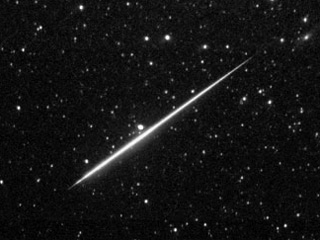
Ever look into the night sky and see a streak of light flash across your eyes? Was it a plane, a skyrocket or something unexplainable? Chances are it was a comet streaking across the night sky. You may be asking yourself, " I have heard the words comet, asteroid and meteorite to describe the same thing. What is the difference?" Well with the lesson plan today, your student will be learning some of the key differences of all these. They are also going to get their hands dirty and make a comet, dont worry parents, your students will be safe. Students participating in todays lesson will learn the different properties of solids, liquids and gaseous substances.Students and parents, a great little video to show the differences between a meteor and a comet is, http://www.howcast.com/videos/28415-What-Is-the-Difference-Between-a-Comet-and-a-Shooting-Star

Day 6 Sun Book


Without the sun, would there be life on Earth? Would the solar system even exist as we know it? These are just a couple of questions students will get answers to in todays lesson. By definition, a solar system can not exist without the sun, a star of average size. Using word processing software students will be creating a 7 page book today that will contain facts about the sun as well as illustrations of our sun. The paths of the planets are dictated by the gravitational pull of the sun itself.
The main purpose of todays plan is to get students familiar with what they can do with a word processing program. They are going to be able to drag and paste photos to their document. They are also going to be able to change the format of the page from letter to landscape. They are going to alter the size and font along with color of text. Here ( http://docs.google.com/Doc?id=dg99826p_5232wwjp3x&invite=1275682130 ) is a great sample of what the students will be creating in the class today.

Thursday, May 21, 2009

Day 7 Sun Specs


Compostion of the Sun means playtime in class today. Today students get to experiment outside the classroom and have some fun. Students will be learning that the Sun is not all red or yellow. The colors of the Sun are determined by the chemical composition within it. The Sun is primarily composed of Helium and Hydrogen with give it its red and yellow appearance.
Today students will be creating rainbows in the school play field. Todays activity will be a group activity and require them to work together to get the desired result, a visible rainbow. Students will learn tht the colors in a rainbow are actually from light being bent by water. Not all rainbows will have the same colors. Here ( http://docs.google.com/Doc?docid=dfz8dg3m_65fz4dskhc&hl=en ) is a brief document showing what todays activity is about.
The evaluation of this activity is based on teamwork by the group. Students, this is your chance to shine. Work together, share ideas, everyone should be participating since each of you is relying on the other for your grade today. Get creative, who can create the largest rainbow? Who can make the smallest? Which group will get the brightest colors.

Day 8 Solar System History


Today students will be learning about some historical events that have occured through the ages.
1543 A.D. Copernicus theory of the Universe1656 A.D. Christian Huygens discovers Saturn's rings and Titan, the fourth satellite of Saturn1781 A.D. The discovery of Uranus by Herschel1846 Discovery of Neptune1969 Moon Landing, Apollo 11 crew1980 U.S. Voyager 1 sends back first images of Saturn and its rings to Earth
The students will be broken up into groups of 6 and be given an hour to compile as much information as they can about their event.
The purpose of the research is to then write, using a document software application, a clear and concise paper about the event. They will also need to use google images to help support the research they have written about. This is a great example of what the end result should look like. http://docs.google.com/Doc?id=df72krcp_65gz4q9rfd&hl=en
By having the students use 1 hour for research and then immediately presenting their information they can expand upon their writing should anyone have questions about the event.

Day 9 Field Trip To Griffith Observatory


Today has to be the most anticipated day of the Thematic unit. Students have heard from other students how fun and cool it is to go to the observatory. This is a great chance for the students to tie in all that they have learned so far. Now it wont be all fun and games for the students however they are sure going to feel like that was the case. While at the Griffith Observatory students will be able to see several presentations in some of the most sophisticated and state of the art facilities in the world. http://www.griffithobs.org/While there, students will grouped in four and asked to complete several word searches based on the presentations they have watched or participated in.Water is Life is one of the presentations they will see. http://www.griffithobservatory.org/psoplanet.html The students know that water is essential for life to flourish so if we are able to find it on other planets, will life exist there as well?

Thursday, May 14, 2009

Day 10 Activity 1 Building a Solar System


Today is the final day for our Solar System Theme. Students will combine their learnings from the last two weeks and build their own model of the solar system they live in.
Each student has been assigned a planet of their own. They have researfched and studied each planet and are aware of the compositions of each. With the information they have they will work in a group of 8 to build and create a scale model of the solar system. Students will be able to use a variety of materials to create their solar system model. They may use fruit, some may want to use styrofoam, others may want to use marbels. The idea behind this project is to have the students be able to correctly show the size relationships of the planets from smallest to largest, closest to farthest from the sun.